
One material, many roles — the same natural base grows into protective packaging, a construction panel or an acoustic panel, depending on what you need. First, we present two development projects, followed by our full product collection.

NEW IN OUR RANGE
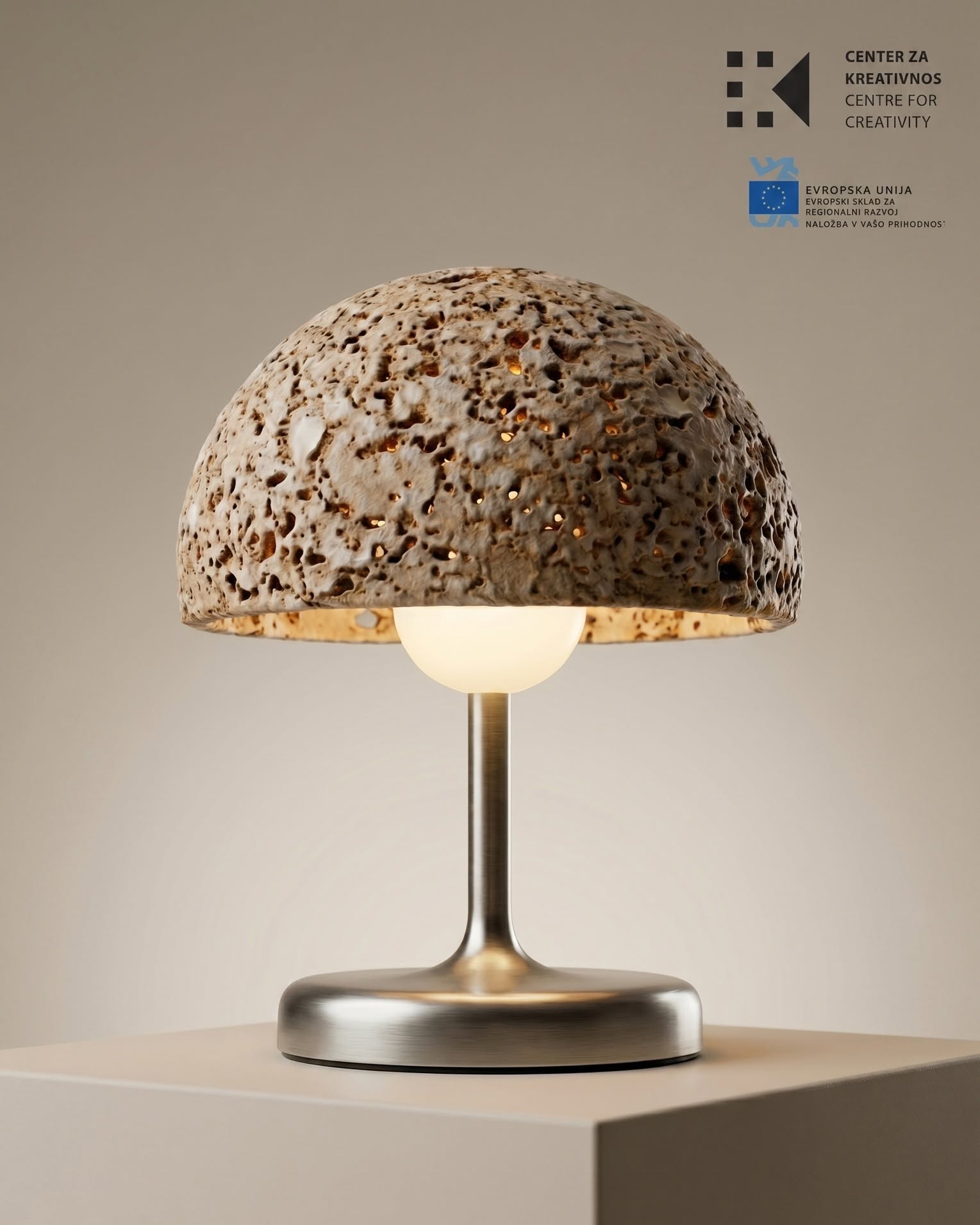
Development of bio-based lamps that combine material innovation, design and healthier interiors.
NON TOX LUX explores the potential of healthier, bio-based materials and their role in creating healthier living environments through light and design.
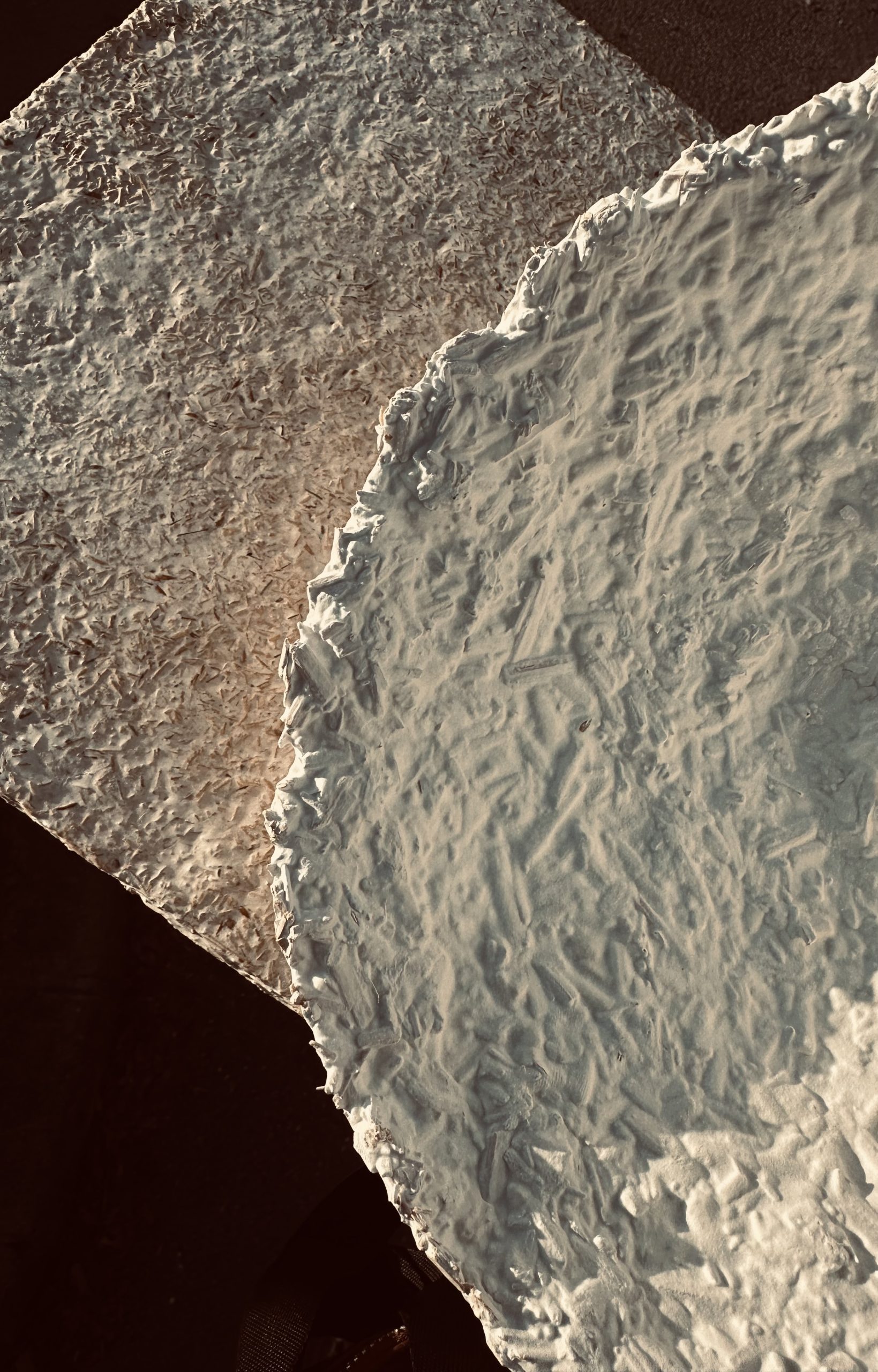
The project focuses on developing the first collection of bio-based lamps made from mycelium composites, exploring new possibilities at the intersection of material innovation, architecture and product design. Through collaboration between mycelium material specialists and the creative sector, prototypes are being developed that test the potential of locally produced, renewable and circular materials in contemporary interiors.
The project’s goal is to develop the first lamp collections, test their market potential, shape a brand identity, and lay the groundwork for future series production and collaborations.

The investment is co-financed by the Republic of Slovenia and the European Union under the European Regional Development Fund.
MORE POSSIBILITIES
Mycelium composite can also be combined with other materials. In the DeremCo development project, we combined it with recycled wind turbine blades.
DEREMCO DEVELOPMENT PROJECT
A wakeboard made of mycelium biocomposite with embedded recycled wind turbine blades.
In the DeremCo project (De- & Remanufacturing for Circular Economy Investments in the Composite Industry), we developed new reprocessing support techniques for the impregnation of recycled GFRP (glass fibre reinforced polymer) materials. The approach combines manual resin application with our mycelium composite production technology.
The result is a high-performance composite material that brings composite industry waste back into use: using our proprietary process, we incorporate shredded recycled wind turbine blades into a solid structure. This material was used to make the hybrid wakeboard you can see in the video.
This project has received funding from the European Union’s ERDF under grant agreement No 101084037. Views and opinions expressed are however those of the author(s) only and do not necessarily reflect those of the European Union or the European Innovation Council and SMEs Executive Agency (EISMEA). Neither the European Union nor the granting authority can be held responsible for them.
PRODUCT COLLECTION
The lamp and the wakeboard are just two examples. Below is a collection of other products already grown from the same material, from protective packaging for bottles to construction panels and acoustic panels. Together they prove the same thing: the material adapts to the shape, not the other way around.
Properties measured to international standards


Tell us about your application and we’ll explore whether mycelium-based materials could be a suitable alternative.
We will use your information solely for the purpose for which we obtained your consent. We will use your personal information confidentially and will not forward it to third parties. Your privacy is treated in accordance with the GDPR and the Personal Data Protection Act.
From message reception, you can opt out at any time by sending a message to the email address: info@mycopor.eu with subject: Sign Out. After processing the request for cancellation, Rutena d. o. o. will stop sending content from which you have unsubscribed. For details on logging, processing, and protecting your personal information, please see Terms and services.